
Group Health Alone Is Not Enough Anymore. Here Is What Changed.
David Vudragovich · AgentDavidCares.com · Licensed Independent Group Benefits Advisor
Employee benefits used to mean one thing. Group health insurance, nothing else.
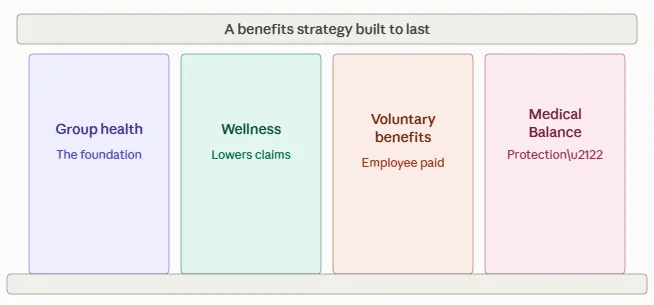
That is no longer true, and it has not been true for a while. Today, a properly structured benefits strategy rests on four pillars working together: group health, wellness, Medical Balance Protection™, and voluntary benefits. Understanding how that happened explains why treating benefits as a single line item still leaves most employers behind.
How it started: one pillar, born out of wage controls
During World War II, the federal government froze wages to control inflation. Employers, unable to compete for workers on pay alone, started offering health insurance instead. In 1954, the tax code made employer-paid premiums tax-deductible, and that decision quietly cemented group health insurance as the standard, single-pillar benefit for the next several decades.
The second pillar: wellness enters the picture
By the 1970s and 1980s, rising medical costs pushed employers toward something new, corporate wellness. Early fitness programs, smoking cessation efforts, and the first pre-tax accounts for medical expenses appeared during this era. The logic was simple: healthier employees generate fewer high-cost claims, which keeps the whole plan more affordable.
The third and fourth pillars: risk shifts, and coverage has to fill the gap
Through the 1990s, HMOs and PPOs began shifting more financial risk onto employees through higher deductibles, a trend that accelerated through a decade that also brought significant Medicare and healthcare budget changes reaching well beyond employees under 65. As deductibles climbed, coverage built to close that exact gap emerged as a real answer.
Plans built to close that exact gap became available between 2010 and 2015, and David learned about and started protecting his clients with it in 2019, years before he had a name for it. Voluntary benefits can be used to help close that same gap, though employees choose whether and how to use them. What started as an optional add-on became structurally necessary to be able to survive a major medical or accident situation without financial devastation.
Where that leaves employers today
Four pillars now exist for a reason. Group health provides the foundation. Wellness reduces the claims that drive the renewal higher. Voluntary benefits let employees add protection that fits their own life, often at no direct cost to the employer. Medical Balance Protection™ catches what the other three still leave exposed.
Most employers still evaluate their benefits the way their grandparents did, one pillar, reviewed once a year, renewed out of habit. The employers who understand all four, and how they work together, are the ones building something sturdier than a compliance requirement. They are building real protection.
This article was developed with AI assistance and reflects the experience, voice, and opinions of David Vudragovich.
Do you have clients or colleagues who offer group health insurance to 10 or more employees? Visit AgentDavidCares.com/RP
FAQ:
Q: Do all four pillars cost the employer more money?
A: Not necessarily. Voluntary benefits are typically employee-paid, and a properly structured wellness plan can reduce the claims driving up the group health renewal, meaning future annual increases tend to be smaller.
Q: Is Medical Balance Protection™ the same as group health insurance?
A: No. Medical Balance Protection™ is a separate policy that pays directly toward specific medical expenses, like hospital stays or major diagnoses.
Q: Why did benefits shift from one pillar to four?
A: As employee financial exposure grew through rising deductibles, particularly after the Affordable Care Act, a single group health plan stopped being enough on its own to fully protect employees.
Sources: U.S. Chamber of Commerce, "Origins and Growth of Employer-Provided Insurance"; UHC, "Evolution of Group Health Insurance."
AgentDavidCares.com does not provide tax advice. Consult your accountant.